Pillar 1 · The spearhead
Stay legal, automatically
Compliance stopped being a folder of certificates on 1 May 2026. It is now a set of duties that attach to a tenancy and keep moving: grounds-based possession, Section 13 the only route to a rent rise, a register to file with, EPC C in 2030. HomeDash works out what each of your properties owes and when — and produces the document when it is time to act.
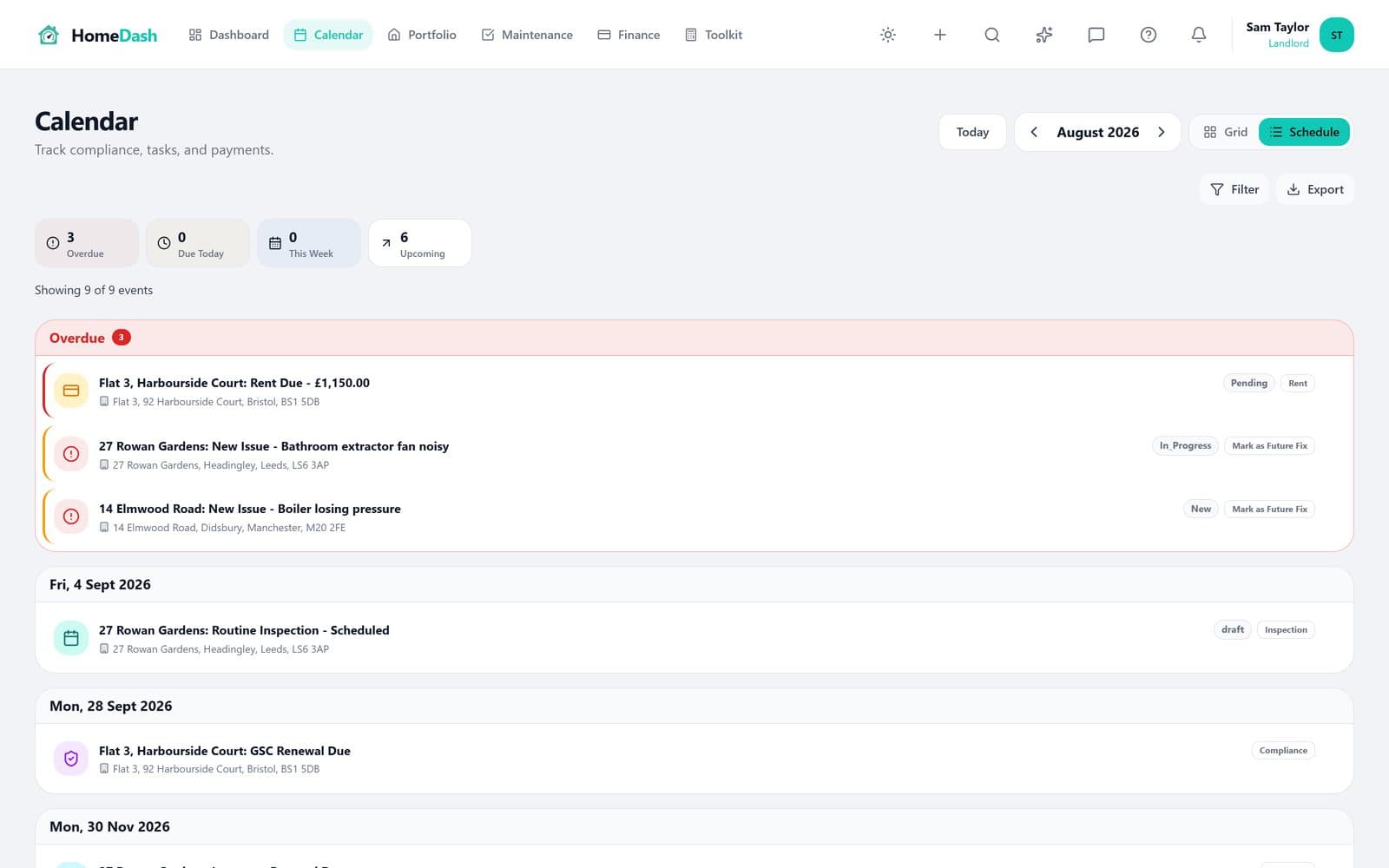
Real product, demo portfolio — this is the actual HomeDash interface.
The old way
- Renewal dates in your head, a spreadsheet, and three folders — until one is nowhere
- A notice typed in Word, and no record of what was served or when
- “Did I renew that?” at 11pm on a Sunday
With HomeDash
In HomeDash the obligations are worked out, not typed in. A tenancy, a certificate, a rent change or a served notice each move what the property owes — so the next thing to do appears on its own, with the document to do it attached.
Obligations you did not have to remember
HomeDash derives your statutory duties from the records you already hold — certificates, tenancies, rent changes, notices — and surfaces them on the dashboard and the calendar before they bite. Nothing to type in as a task and nothing to forget to create.
Statutory notices, produced and evidenced
Section 13 rent increases and Section 48 notices generated with your data on the prescribed form, then signed — digitally, or printed and wet-signed with the served copy scanned back in. The signed version becomes the record, with a dated evidence trail behind it. Not a Word template you fill in and hope you kept.
Ready for the PRS Database
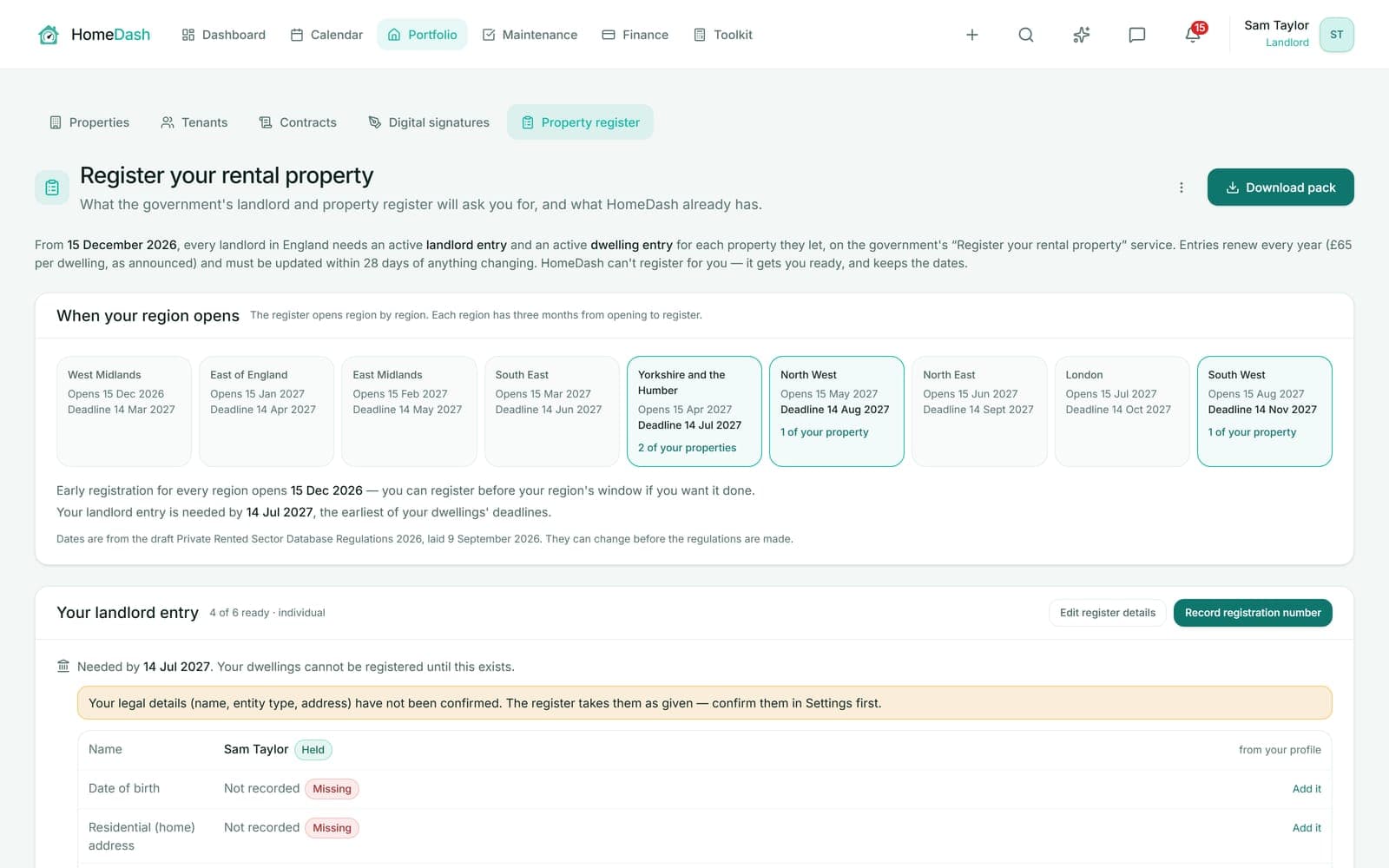
The register opens to landlords from December 2026. HomeDash checks every field the draft regulations ask for against what you already hold, marks what is missing, and builds the registration pack per property. The government service stays the record — HomeDash holds the numbers it hands back and runs the 28-day clock when something you registered changes.
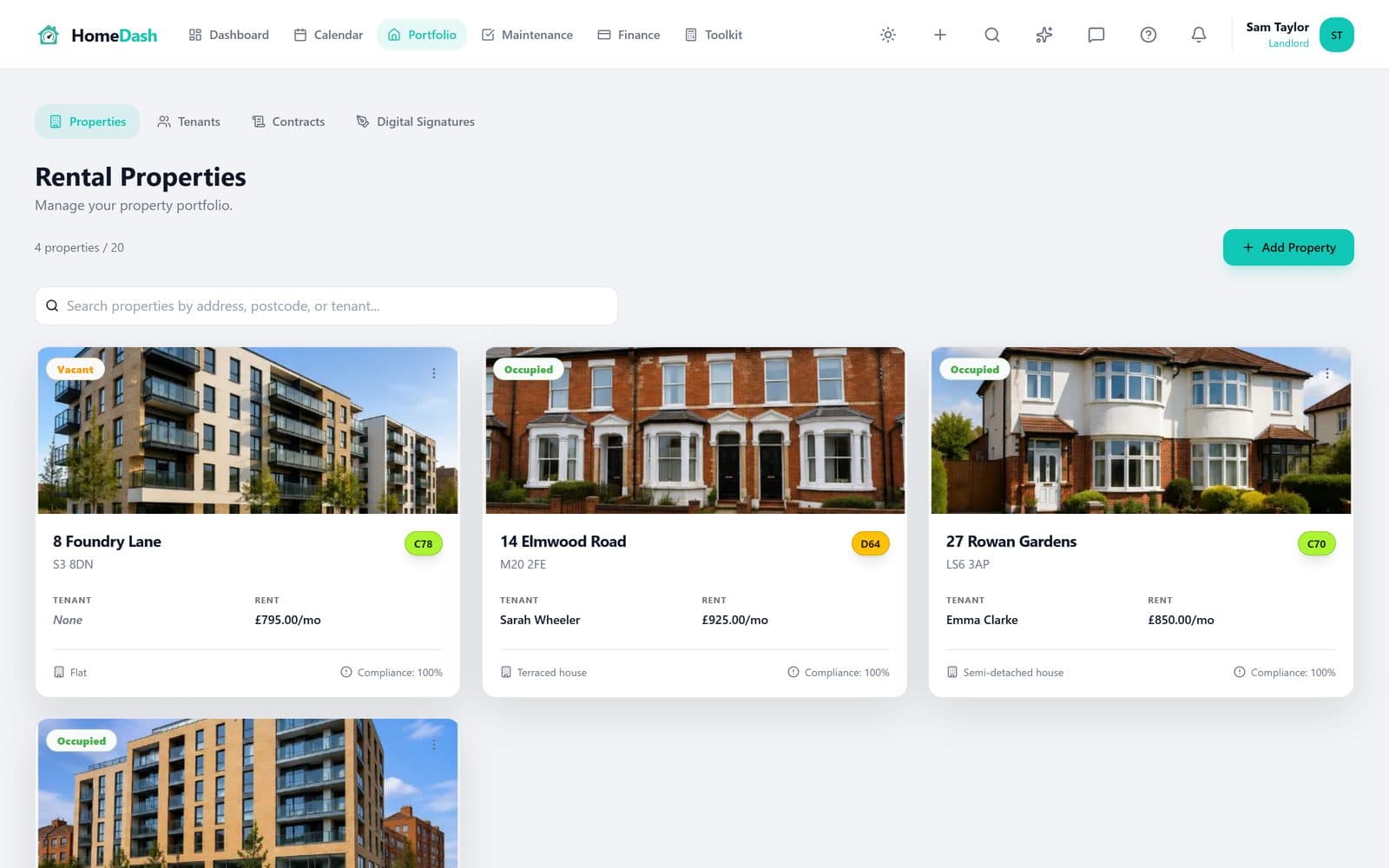
Certificates on every property
EPC bands and compliance status visible on every property card. Each certificate is stored against its property with its renewal cycle tracked — audit-ready, always findable.
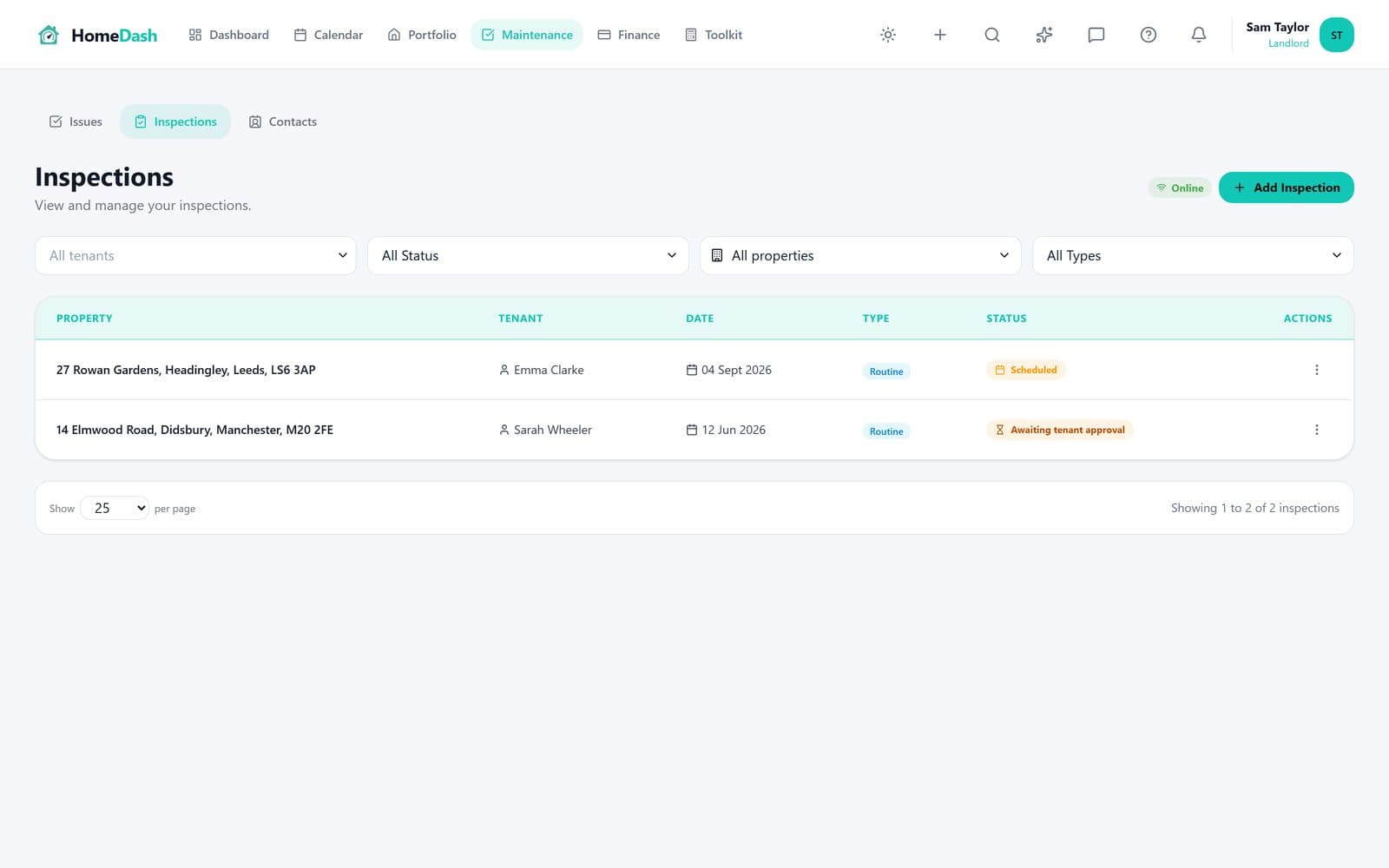
Inspections with a paper trail
Schedule inspections, record conditions room by room, and get tenant sign-off — building the dated evidence file that possession claims, deposit disputes, and the coming hazard-response rules all run on.
The evidence vault
Agreements, certificates, inventories, and correspondence stored against the property and tenancy they belong to. “Can you produce the document?” becomes a ten-second job.
Your obligations work themselves out
Add your first property free and the duties it carries — with the dates and the documents — appear on their own.